
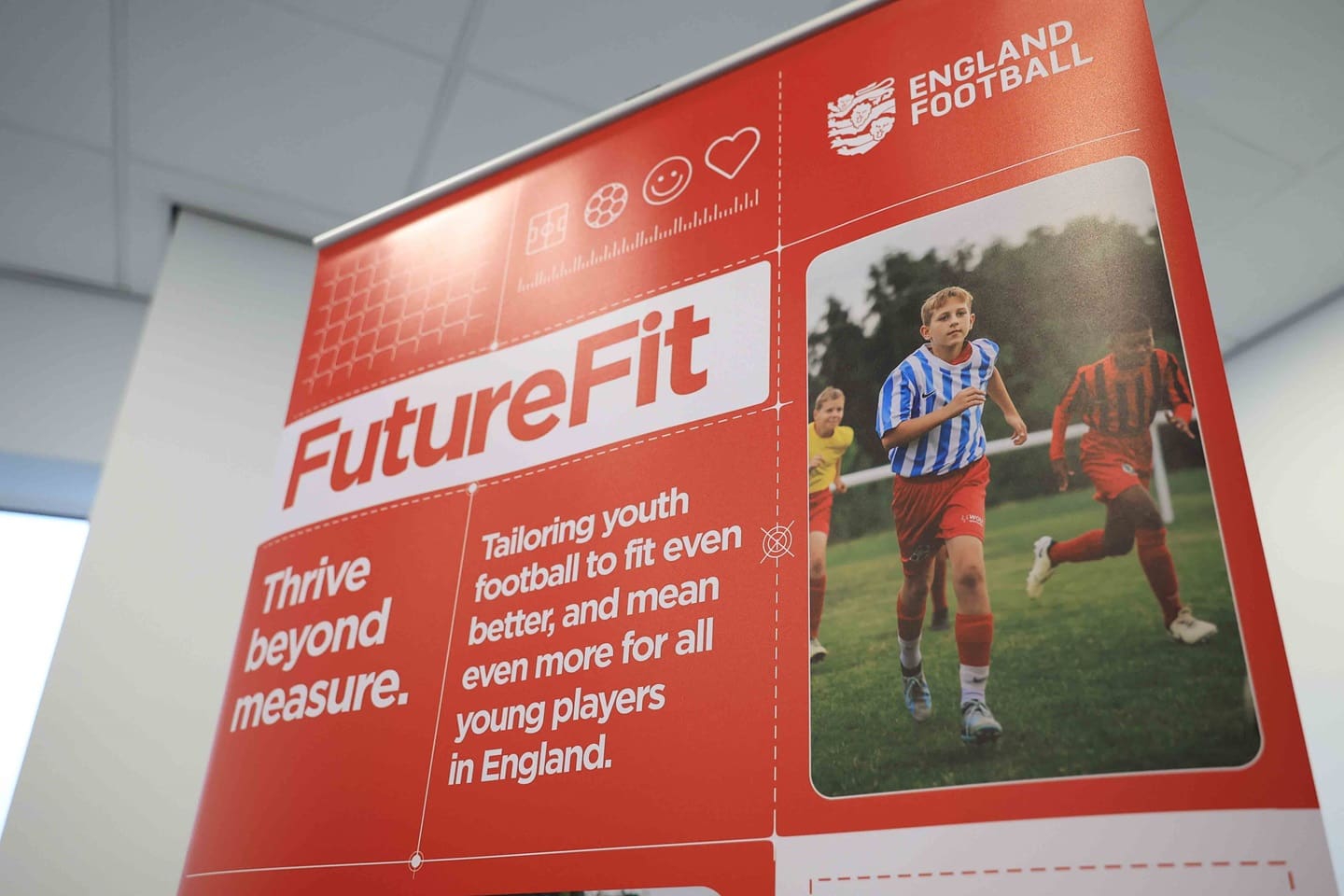
If you have a child playing youth football this season, some of the games may look a little different. That is deliberate.
From 2026/27, The FA’s FutureFit changes alter the pathway through youth football. U7s now start with 3v3 football. Players then progress through 5v5, 7v7 and 9v9 before moving to 11v11 from U14.
For parents who grew up with children moving onto bigger pitches and bigger teams earlier, it can feel unusual. But the principle behind it is straightforward: the game should grow with the child.
What is changing?
The maximum formats are now:
- U7 — 3v3
- U8–U9 — 5v5
- U10–U11 — 7v7
- U12–U13 — 9v9
- U14+ — 11v11
That means each stage lasts a little longer and the full adult format arrives later.
Why smaller-sided football?
Think about a young player in a large game. It is possible to spend quite a lot of time nowhere near the ball. Reduce the number of players and that changes quickly.
There are more touches, more one-to-one situations and more opportunities to attack, defend, dribble, pass, shoot, lose the ball and win it back. Players have to make decisions more often because the game keeps coming to them.
The FA’s FutureFit work was informed by research and testing in grassroots youth football, alongside looking at youth formats used elsewhere in Europe. The aim is to create a game that better reflects children’s stage of development rather than moving them towards the adult game too quickly.


What will 3v3 look like?
For U7 parents, 3v3 may initially look hectic — because it probably will be. With only six children on the pitch, everyone is involved. There are fewer places to stand and wait for somebody else to do something.
That is a feature, not a problem.
At this age, we want children experimenting. We want them trying to beat a player, deciding when to pass, learning what happens when they lose possession and discovering how to solve problems for themselves.
Not every decision will be the right one. That is how learning works.
Bigger is not automatically better
It is easy to see moving to a larger pitch or a larger-sided format as progress. In youth football, progress is the player developing — not simply the game becoming more like adult football.
A child does not need to be hurried towards 11v11 to become a better footballer. They need opportunities to play, to be involved and to enjoy what they are doing.
That fits closely with the way we already think about football at Thurlby Tigers. Our aim is not to produce the most adult-looking team as quickly as possible. It is to give children an environment in which they can develop at their own pace and, crucially, still want to play next week, next season and beyond.
So if your child’s football looks a little smaller this season, remember what is getting bigger: their involvement in the game.

